A Body Which is Braindead but Whose Organs Can Continue to Function for a While
Brain death is the permanent loss of brain activity. As a result, people cannot breathe or maintain other vital functions on their own, and they permanently lose all awareness and capacity for thought.
-
Artificial means can maintain breathing and keep the heart beating for a while, but once brain death occurs, nothing can keep the other organs functioning indefinitely.
-
Doctors must use specific criteria to diagnose brain death.
-
No treatment can help a person who is brain dead.
-
A diagnosis of brain death is equivalent to a person's death.
Brain death means that the brain stops functioning. People do not respond to any stimuli. No treatment can help, and once the diagnosis is confirmed, a person is considered legally dead.
In the past, the idea of brain death was irrelevant because when the brain died, so did the rest of the body. That is, the person stopped breathing, and the heart stopped beating. However now, artificial means (such as ventilators and drugs) can temporarily maintain breathing and the heart's beating even when all brain activity stops. But eventually, even with help from artificial means, all the body's organs stop working. Nothing can keep the heart beating indefinitely once brain death occurs.
-
A doctor's evaluation based on specific criteria
-
Occasionally other tests, usually to make organ donation possible
There are specific criteria for diagnosing brain death. They include
-
Checking for and correcting all treatable problems that could alter brain function and thus result in a misdiagnosis of brain death (such as very low body temperature, very low blood pressure, or very low blood levels of certain substances such as sugar and sodium or an overdose of a sedative)
-
Identifying and treating any condition that could cause coma and irreversible loss of all brain function
-
Testing the person's reflexes (such as the gag reflex, triggered by touching the back of the throat) and observing no response (the person does not grimace, move, or otherwise react)
-
Testing the eyes and observing no reaction to light
-
Testing breathing by taking the person off the ventilator and observing that the person makes no attempt to breathe
Doctors should maintain communication with the family or attempt to notify the person's next of kin or a close friend of their findings as soon as the diagnosis and evaluation of brain death begins.
Doctors typically recheck the criteria 6 to 24 hours later to confirm the person's lack of response.
All of the following must be done:
-
All treatable problems that could be misdiagnosed as brain death are ruled out.
-
A comprehensive neurologic examination has been done.
-
The required testing has been done.
In adults, brain death can be confirmed after a second check is done 6 to 24 hours later. For children, some states advise doctors to do two separate examinations, separated by at least 48 hours.
Occasionally, when results of the initial evaluation are uncertain or the evaluation cannot be completed, doctors use certain diagnostic tests to help them diagnose brain death. Establishing the diagnosis of brain death quickly may be especially important when organ transplantation is planned—for example, after catastrophic head injuries (as may occur in car crashes). The tests include
-
Imaging tests can be used to detect blood flow to the brain: No blood flows to the brain when a person is brain dead.
Imaging tests include positron emission tomography Positron Emission Tomography (PET) Positron emission tomography (PET) is a type of radionuclide scanning. A radionuclide is a radioactive form of an element, which means it is an unstable atom that becomes more stable by releasing... read more 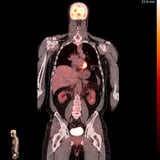 (PET), angiography Angiography In angiography, x-rays are used to produce detailed images of blood vessels. It is sometimes called conventional angiography to distinguish it from computed tomography (CT) angiography and magnetic... read more , CT angiography CT angiography In computed tomography (CT), which used to be called computed axial tomography (CAT), an x-ray source and x-ray detector rotate around a person. In modern scanners, the x-ray detector usually... read more
  , single photon emission computed tomography Single-photon emission computed tomography (SPECT) In radionuclide scanning, radionuclides are used to produce images. A radionuclide is a radioactive form of an element, which means it is an unstable atom that becomes more stable by releasing... read more (SPECT—which uses a radioactive molecule called a radionuclide to produce images of blood flow), and Doppler ultrasonography Doppler ultrasonography Ultrasonography uses high-frequency sound (ultrasound) waves to produce images of internal organs and other tissues. A device called a transducer converts electrical current into sound waves... read more
 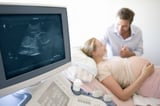 of blood flow to the brain.
No one who meets the criteria for brain death recovers. Thus, once brain death is confirmed, the person can be considered dead.
After brain death is confirmed, all life support is stopped. Family members may wish to be with the person at this time. They need to be told that one or more limbs may move when breathing assistance is ended or that the person may even sit up (sometimes called the Lazarus sign). These movements result from spinal reflex muscle contractions and do not mean the person is not really brain dead.
CLICK HERE FOR THE PROFESSIONAL VERSION

Copyright © 2022 Merck & Co., Inc., Rahway, NJ, USA and its affiliates. All rights reserved.
Source: https://www.msdmanuals.com/home/brain,-spinal-cord,-and-nerve-disorders/coma-and-impaired-consciousness/brain-death
0 Response to "A Body Which is Braindead but Whose Organs Can Continue to Function for a While"
Post a Comment